



Who is quicker: the vaccination campaign or the virus?
The current pandemic can indeed be compared to a race. The Corona-virus ability to mutate favours ever new infections that in turn facilitate the evolving of new mutations. The original wild-type is replaced by more aggressive variants. A cycle could develop that could greatly lengthen the duration of the health crisis.
The Cyprian Plague lasted from 250-270AD and had an extremely high death toll: up to 5,000 people a day died alone in the city of Rome. To this day the pathogen is unknown, but one assumes it was a virus.
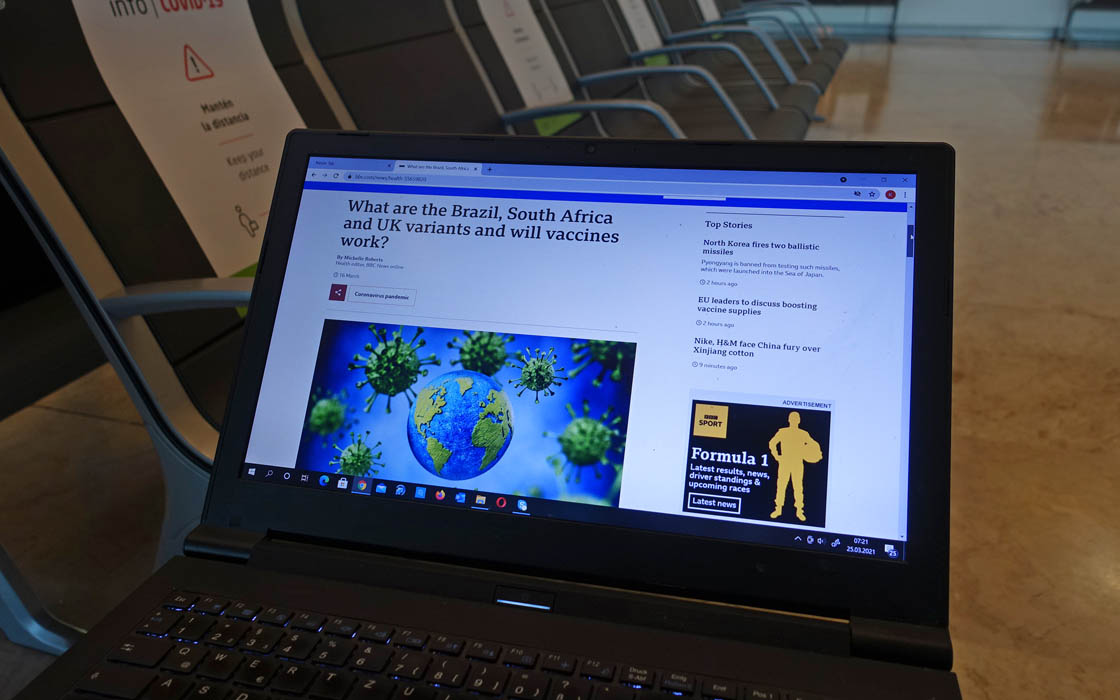
The Brazilian variant is currently holding sway in South America, while the British one is spreading in Europe. Naturally the vaccinations are being adapted, but this needs time. And the time factor is the decider in this race.
The current pandemic reminds us of our own mortality. Compared to eternity our lifespan is truly incredibly short. Now the sword of Damocles of an infection with an uncertain outcome hangs over us all. Of course we all want to live, but the focus of the Christian hope is on the final solution, namely, life after death. The Christian faith cannot be boiled down to loving one’s neighbour and furthering social justice; its core is the belief that God provides us with an eternal future. Contrary to the Buddhist’s Nirvana, where one’s self is extinguished, the Bible promises us that our identity continues existing after our passing.
Exceptional circumstances like wars and pandemics happen in order to get us thinking. And this meditative introspection of the ‘Where from?’, ‘Where to?’ and ‘Why’ is valuable. “Lord teach us to number our days so that we may gain a heart of wisdom!” wrote the Psalmist roughly 2,500 years ago (Psalm 90:12). Superficial hypes that characterise many areas of our culture are exposed as useless. In this sense Covid-19 is a real eye-opener.
The time has come that we must come up with our personal answer to the question of the reason for our existence and what will happen after the tragedy of death. The Book of books gives us an answer, the Robert-Koch-Institute does not. /KDJ